Impact Story
Lost Childhoods: The Silent Struggle of Rural Children Without Education
In the quiet stretches of the world’s countryside, away from the neon glow of progress, a silent crisis is unfolding. It isn’t marked by loud protests or breaking news banners; instead, it is defined by the absence of a school bell.
As of April 2026, the global education gap has reached a sobering milestone. According to the latest UNESCO Global Education Monitoring Report, the number of out-of-school children has risen for the seventh consecutive year, totaling 273 million. The vast majority of these children reside in rural areas, where the "lost childhood" is not a metaphor, but a daily reality.
The Geography of Exclusion
For a child in a remote village, the path to a classroom is often blocked by more than just poverty. It is blocked by distance, terrain, and a lack of basic infrastructure.
-
The "Education Desert": In parts of sub-Saharan Africa and rural Asia, the nearest secondary school can be a six-hour walk away. When the journey to school is a marathon, education becomes an impossibility.
-
The Infrastructure Gap: Many rural schools operate without electricity, clean water, or even basic sanitation. Without these, schools struggle to retain teachers and provide a safe environment for adolescent girls.
-
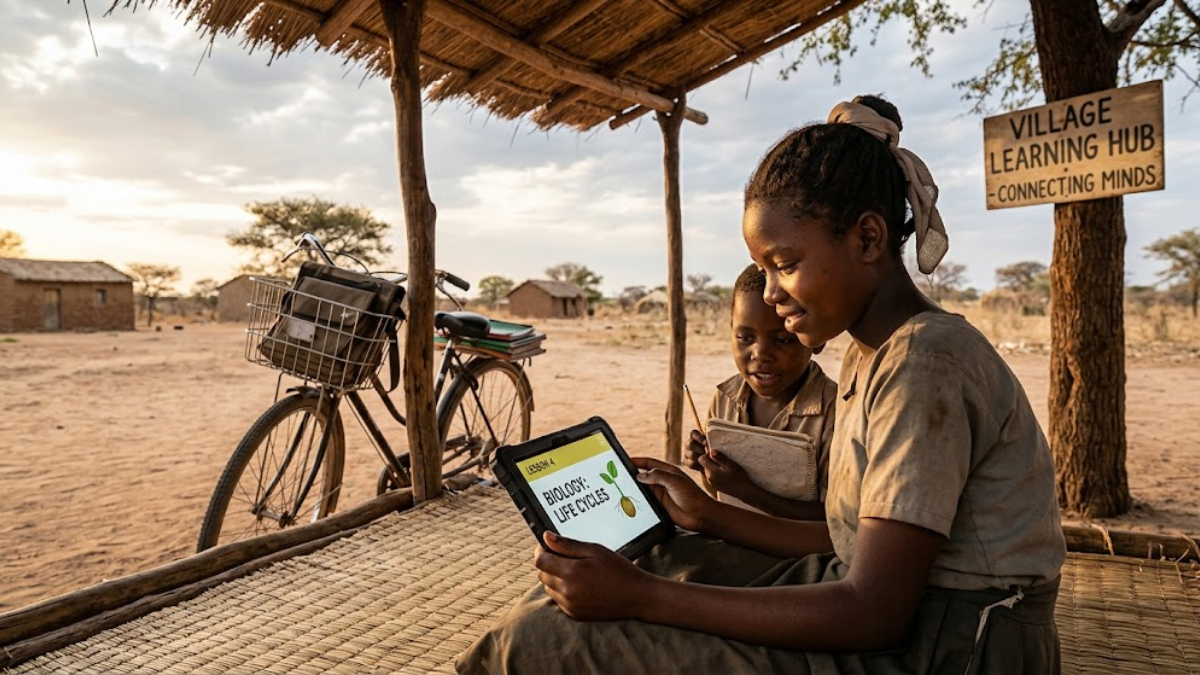
The Digital Divide: While urban centers discuss the ethics of AI in classrooms, many rural students have never held a tablet. In 2026, the gap between "connected" and "disconnected" learners is the new frontline of global inequality.
The Economic Handcuff: Survival vs. Schooling
In subsistence farming communities, a child is often viewed as a pair of hands before they are viewed as a student. The "silent struggle" is the agonizing choice parents must make between a child’s long-term future and the family’s immediate survival.
-
Opportunity Cost: Sending a child to school means losing a laborer for the fields or the household.
-
Hidden Costs: Even when tuition is "free," the cost of uniforms, books, and transport is a barrier that keeps millions in the poverty trap.
-
The Intergenerational Cycle: Parents who were denied an education are often less equipped to advocate for their children’s schooling, leading to a cycle where poverty is the only inheritance.
The Cost of Silence: Long-term Impacts
The "loss" in lost childhoods isn't just about missing a grade; it's about the erosion of human potential. Without education, rural children face:
-
Economic Stagnation: Each year of schooling increases future wages by approximately 10%. Without it, they are tethered to low-wage, high-risk labor.
-
Vulnerability to Exploitation: Uneducated youth are at a higher risk for child marriage, human trafficking, and dangerous work environments.
-
Civic Disenfranchisement: Education is the tool for self-representation. Without it, rural populations remain "silent," unable to navigate legal systems or advocate for their community’s needs.
The Glimmer of Hope: 2026’s Innovative Solutions
Despite the grim statistics, 2026 has seen the rise of "Grassroots Ingenuity." New models are proving that if children cannot get to school, the school must go to them.
-
Literacy Champions: Initiatives like the Amuno Rural Hub in Uganda use youth on bicycles to deliver play-based learning to remote villages.
-
Low-Connectivity EdTech: Startups like TrueLeap and SkillEd are deploying AI-powered platforms that function entirely offline, bringing the world's library to a village solar-powered tablet.
-
Climate Resilience Hubs: In regions like Pakistan, schools are being redesigned as "resilience hubs" that teach vocational climate adaptation alongside traditional literacy, making education immediately relevant to rural survival.
Final Thought: The Moral Imperative
A child’s zip code should not be their destiny. The "Lost Childhoods" of our rural areas are a collective failure, but they are also a solvable one. As we move through 2026, the goal is clear: we must transform education from an urban privilege into a universal right.
Until every village child can trade a plow for a pen, the world’s progress will remain incomplete.
“Education is the most powerful weapon which you can use to change the world.” — Nelson Mandela